Itinerary
8 Days Rwenzori Margherita Peak summit- Rwenzori Expeditions
Day 1: Nyakalengija (1,650m) – Nyabitaba Camp (2,650m)
After an early morning briefing, meet the Rwenzori Mountaineering Services office to arrange any required trekking equipment and organize the guides, chef and porters. The trek then begins from the park gate towards Nyabitaba Camp. The trail covers approximately 7 km, taking about 5–6 hours, with an ascent of approximately 1,000–1,200 metres.
At the beginning, the trail passes through local homes and cultivated fields before progressing through tall elephant grass and dense bushes. You will cross River Mahoma and continue ascending through the forest towards Nyabitaba Camp. Along the way, you may encounter wildlife and bird species such as black-and-white colobus monkeys, three-horned chameleons and the Rwenzori Turaco.
Dinner and overnight at Nyabitaba Camp.
Day 2: Nyabitaba Camp (2,650m) – Johnmaate Camp (3,505m)
After breakfast, descend from Nyabitaba towards Kurt Shafer Bridge. The trail drops through the forest for approximately 30 minutes before reaching the bridge, located near the confluence of the Mubuku and Bujuku Rivers. From the bridge, the trail continues through the bamboo forest. After several hours, the terrain becomes increasingly challenging, with slippery, moss-covered rocks requiring careful movement.
You will eventually reach Nyamileju Rock Shelter, from where, weather permitting, you can enjoy views towards Mount Stanley and Mount Speke. The trail then enters the zone of giant heather, giant lobelias and groundsel. The final section crosses challenging boggy terrain before reaching Johnmaate Camp. From the camp, there are opportunities to enjoy impressive views of the surrounding peaks, including Mount Stanley and the Margherita Glacier.
Dinner and overnight at Johnmaate Camp.
Day 3: Johnmaate Camp (3,505m) – Bujuku Camp (3,900m)
After breakfast, descend from Johnmaate Camp and cross the Bujuku River before entering the Lower Bigo Bog, famous for its giant lobelias and other unique Afro-alpine vegetation. The trail crosses the bog by moving from one tussock to another. Despite careful efforts, trekkers may encounter wet and muddy sections.
Continue through the Upper Bigo Bog, following the Bujuku River, which in some sections disappears underground before emerging again downstream from Lake Bujuku. As you proceed, enjoy spectacular views of Mount Baker to the south and Mount Stanley to the west. Bujuku Camp is beautifully situated in the narrow valley between Mount Baker and Mount Speke, below Stuhlmann Pass.
Dinner and overnight at Bujuku Camp.
Day 4: Bujuku Camp (3,900m) – Elena Camp (4,541m)
After breakfast, leave Bujuku Camp and continue through more boggy terrain while ascending the steep slopes west of Lake Bujuku. The trail enters the spectacular Groundsel Gully, eventually reaching Scott Elliott Pass at approximately 4,372m.
Near the head of the gully, a metal ladder helps trekkers negotiate a steep section. From here, the trail divides. The route to the right leads towards Elena Camp and Mount Stanley, involving a steep climb over large boulders. The route to the left leads towards Scott Elliott Pass and onward to Kitandara Lakes. Trekkers attempting Margherita Peak continue towards Elena Camp, where they spend the night preparing for the summit attempt.
Dinner and overnight at Elena Camp.
Day 5: Elena Camp (4,541m) – Margherita Peak (5,109m) – Kitandara Lakes Camp (4,022m)
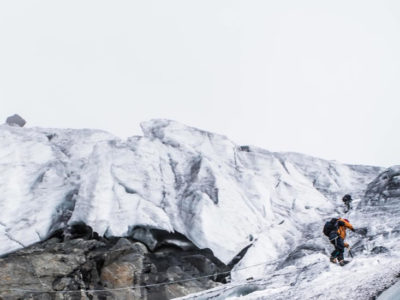
This is the summit day. An early start is recommended. From Elena Camp, continue towards the base of the Stanley Glacier and begin the ascent towards Margherita Peak, the highest point of the Rwenzori Mountains at 5,109m. The summit climb can take approximately 5–7 hours, depending on weather conditions, individual pace and the condition of the route.
The ascent involves glacier travel, steep and slippery rocks, ice and exposed sections. Trekkers should be physically prepared and properly equipped, and the climb should be undertaken with experienced mountain guides. After reaching the summit, weather permitting, enjoy spectacular views of the surrounding Rwenzori peaks and valleys. Begin the descent via the Scott Elliott Pass area, where you can enjoy views of Lake Bujuku, Mount Speke, Mount Stanley and the Kitandara Lakes. Continue through the alpine zone of sparse vegetation and rocky terrain before descending to Kitandara Lakes Camp.
Dinner and overnight at Kitandara Lakes Camp
Day 6: Kitandara Lakes Camp (4,022m) – Fresh Field Pass (4,280m) – Guyeoman Camp (3,505m)
After breakfast, leave Kitandara and ascend steeply up the headwall towards Fresh Field Pass at approximately 4,280m. The trail follows the southern side of Mount Baker. From Fresh Field Pass, weather permitting, you can enjoy views towards the Congo to the west and Mount Stanley to the north.
From the pass, begin the long descent towards Guyeoman Camp, passing through the historic Bujongolo Rock Shelter, associated with the 1906 expedition of the Duke of Abruzzi. Continue through the alpine and heather zones towards Guyeoman Camp.
Dinner and overnight at Guyeoman Camp.
Day 7: Guyeoman Camp (3,505m) – Nyabitaba Camp (2,650m)
After breakfast, begin the descent towards Nyabitaba Camp. The journey takes approximately 6–7 hours, depending on the pace and trail conditions. Below Guyeoman, the route descends through the cliffs of Kichuchu and continues through the bamboo forest zone. The trail gradually becomes easier as you lose altitude and eventually reaches Nyabitaba Camp.
Dinner and overnight at Nyabitaba Camp.
Day 8: Nyabitaba Camp (2,650m) – Nyakalengija (1,650m)
After breakfast, begin the final descent from Nyabitaba Camp towards the park gate at Nyakalengija. The trail follows the same lower section of the Central Circuit, descending through the forest before eventually reaching the lower-altitude vegetation, local farms and communities. Upon arrival at the park gate, complete the necessary formalities and proceed to Nyakalengija.